Introduction
The seminar focuses on the conception and implementation of small but high-quality computer graphics applications. Each project is expected to unite technical excellence with artistic intention. From a technical perspective, it should make use of contemporary interactive 3D rendering methods. From a conceptual perspective, it should be guided by a distinct artistic idea that gives the application its purpose, coherence, and identity. The artistic idea is not an ornament added afterwards; it is the central motivation of the work. There is no product idea in the conventional sense. What matters instead is the quality and harmony of image, animation, sound, motion, atmosphere, and interaction.
Scope and Context
We at the research group for Computer Graphics Systems, chaired by Prof. Dr. Jürgen Döllner, designed a project seminar at the intersection of advanced computer graphics, computational art, and agentic software development. With six Bachelor's students, we conducted this seminar named "3D Rendering & Computational Art" in the summer semester of 2026 at Hasso Plattner Institute, Digital Engineering Faculty, University of Potsdam. The results were as follows.
Projects
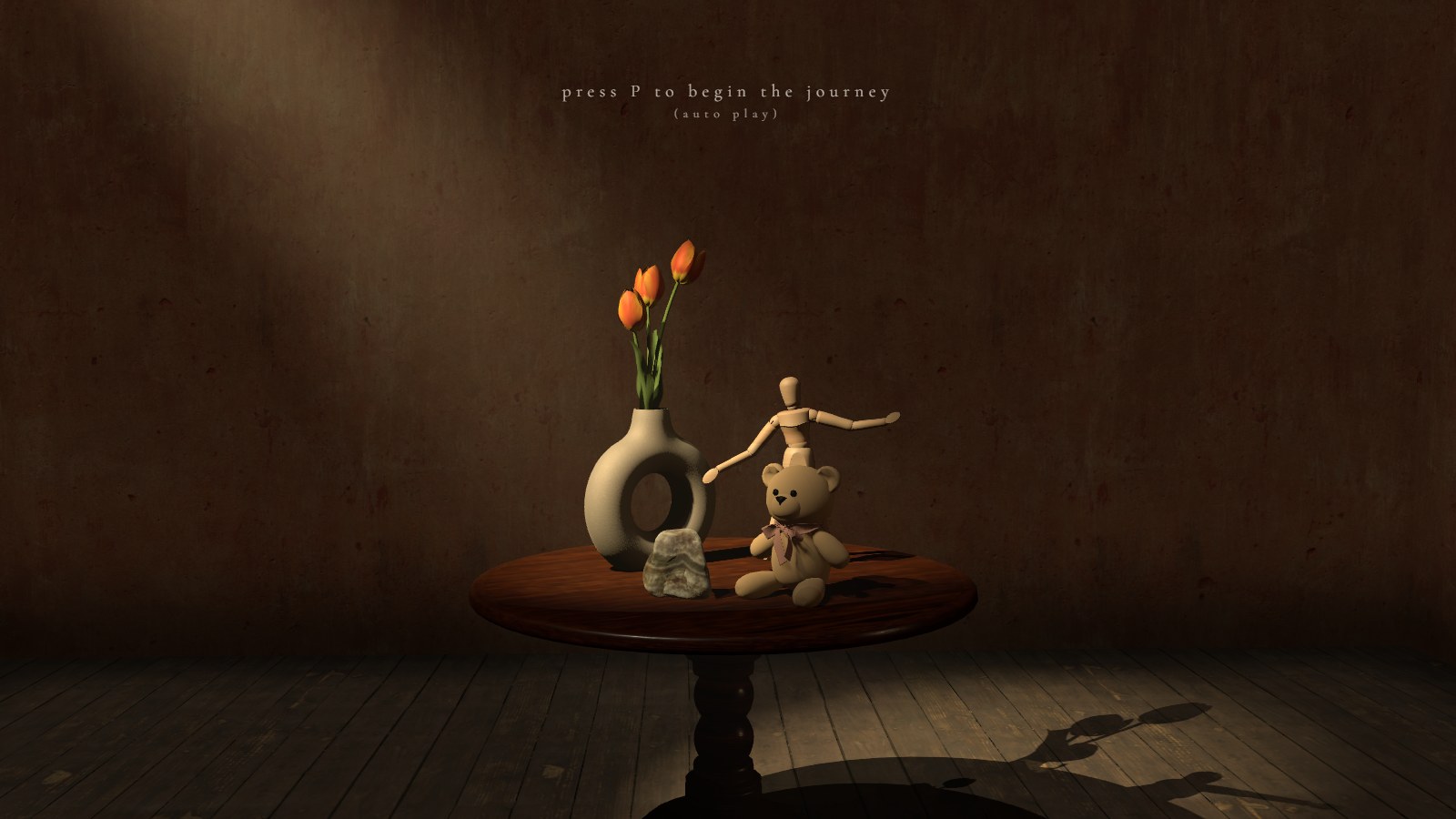
Unstill Life – Vita Perpetua
Contributor:  Yegi Park
The still life is a traditional art genre that depicts inanimate objects carefully arranged in a controlled space. This project extends the genre into a cosmic dimension. The room slowly darkens into outer space, and the objects drift into weightlessness before fading away entirely. Four objects stand for four forms of existence on Earth: a stone as inanimate matter, a flower as plant, a teddy bear as animal, and a wooden mannequin as human. Their quiet disappearance carries the central idea that, from a cosmic perspective, all things are equally transient. They appear briefly, dissolve, and return in a new form as part of an endless cycle.
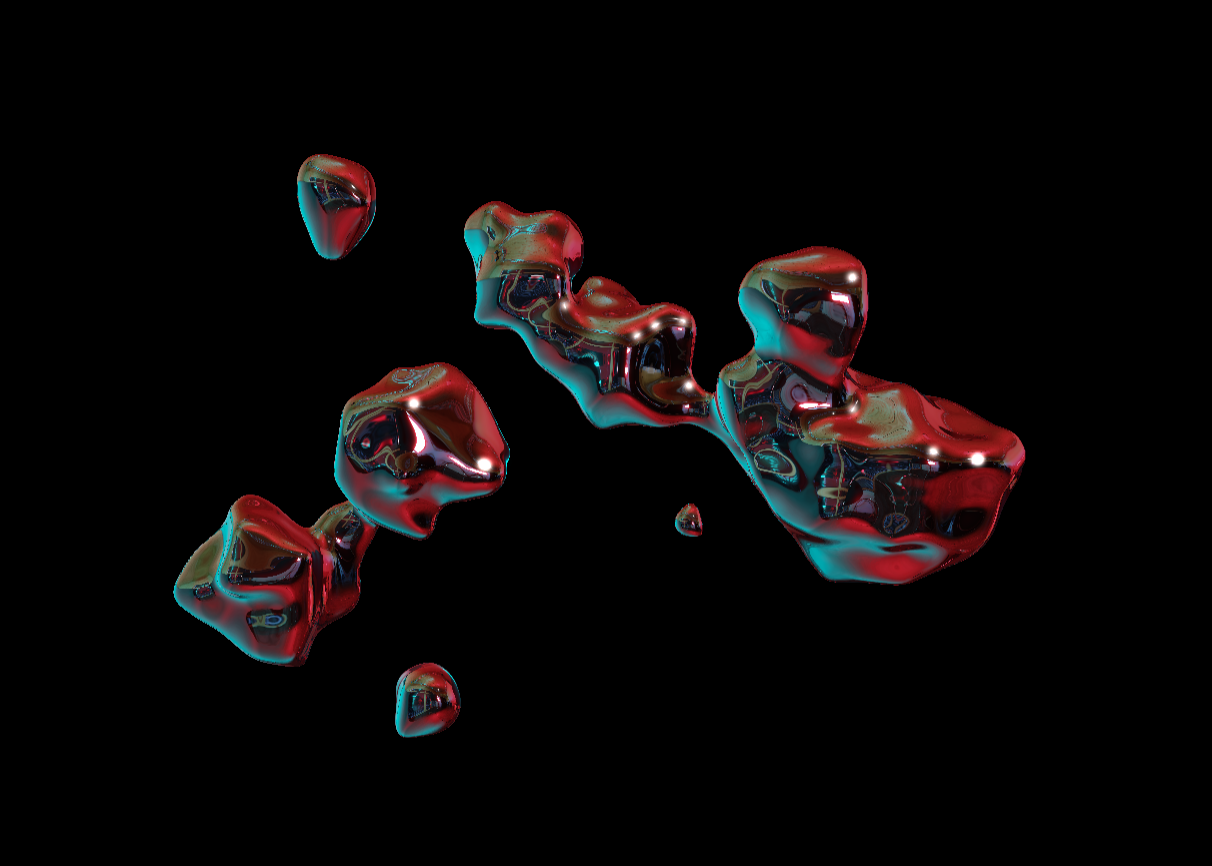
T-1003
Contributor: Jonas Vinmann
This interactive 3D prototype centers on an abstract, non-anthropomorphic creature. It is caught in an endless cycle of composure breaking under the very gaze it tries so desperately to protect itself against. Its deceptively perfect surface cannot entirely conceal how fragile it remains underneath its facade. The moment it notices it is being observed, it bursts open, revealing its true self and scattering its distorted components through space. Only once it believes itself unobserved does it reassemble and resume its attempt to mask its undeniably alien nature. The demo invites viewers to reflect on how readily we project human emotions onto a purely artificial construct, and perhaps to recognize something of themselves in its Sisyphean effort.
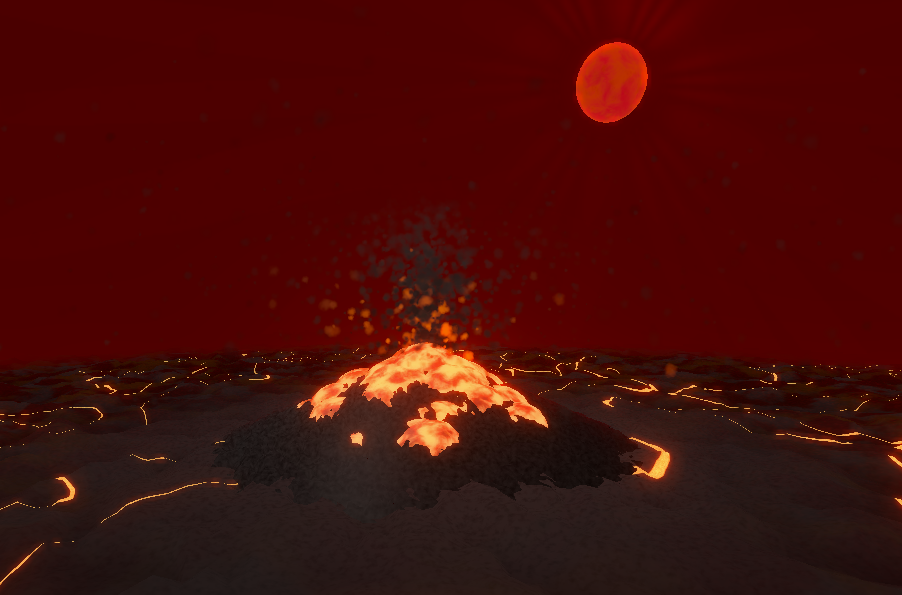
Lava Landscape
Contributor: Shyue-Shyang Alexander Ho
What happens to a still life that never stands still? Unstill Life: Lava Landscape invites you to slow down and explore a volcanic landscape where lava, sun, and ash shift almost imperceptibly. Metaballs give the glowing lava its soft, fluid forms. Touch the lava flow and see how the terrain responds.
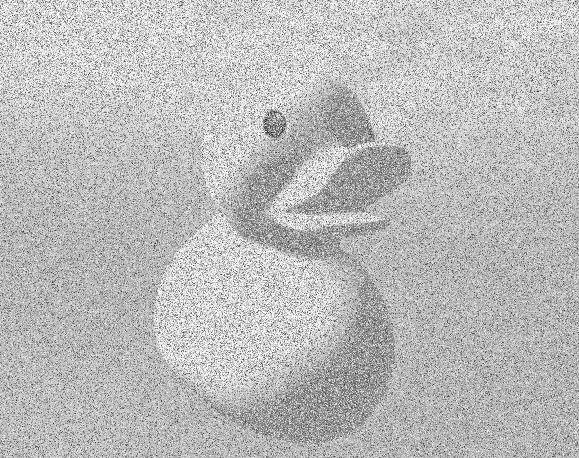
White Noise Space
Contributor: Gustav Meinshausen
White Noise Space is an interactive browser experience in which everyday 3D objects are hidden behind white noise. When an object moves, the noise follows its form — briefly making it visible. Movement is controlled by your head, captured through a webcam. By moving your head in the right rhythm, you can deliberately rotate the hidden object. Once recognized and brought into an upright position, the object is revealed in its real appearance — before the screen dissolves back into noise, concealing the next object waiting to be found.
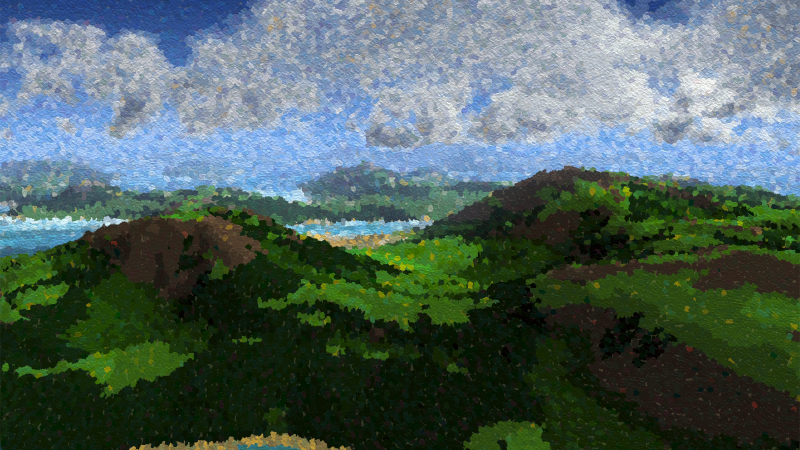
Unstill Life – A Shifting Landscape
Contributor: Richard Pieters
At first glance, Unstill Life is a quiet landscape painting, seemingly finished and at rest. Yet the painting is listening. At the slightest noise, the painting dissolves, and beneath it a procedural landscape awakens. Mountains erode into scattered islands, clouds gather and disperse, and nothing holds its shape for long. Only when the room grows quiet does the restless world slow down, freeze, and settle stroke by stroke into a divisionist painting once more. Whoever wants to see the painting must fall silent, and in that silence the living landscape comes to an end. It turns the vanitas of the classical still life into a question: is stillness preservation, or loss?
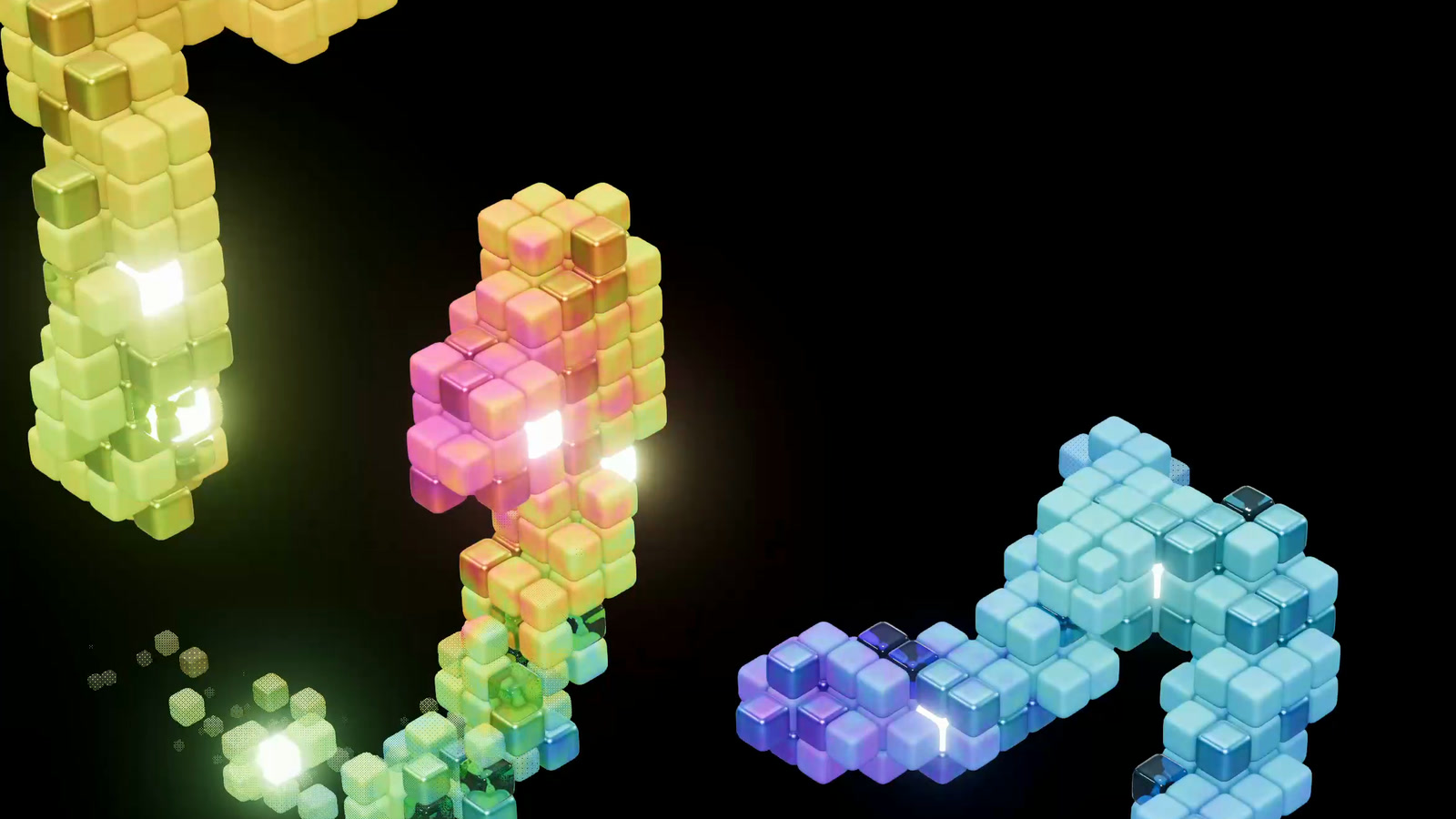
Hue Space
Contributor: isuewo
Hue Space shows a dark space in which colorful cubes appear and disappear again after a while. New cubes keep appearing next to existing ones, so together they form shapes that slowly move through the space. The color of a cube depends on where it is and changes over time. A webcam follows your head, so the screen behaves like a window: moving your head lets you look past the cubes. Each cube that appears on screen is accompanied by a sound.